Test Site
Solar-photovoltaic & thermal experimentsIndoor PV Labs
Controlled testing environmentHigh Performance Computing Lab
Clusters and advanced modelingStorage and Mobility Lab
Storage systems, and electric vehiclesTest Site
Head of the Laboratory: André Cunha (andre.fvcunha@ufpe.br)
An open area for solar-photovoltaic and solar-thermal energy experiments. It includes two solarimetric stations, a solarimetry laboratory, a tower for photovoltaic pumping tests, a high-precision optics laboratory, and a desalination and reverse osmosis laboratory. The solarimetric stations are equipped with thermal and photovoltaic pyranometers for measuring global and diffuse irradiance and soil albedo, pyrheliometers for direct irradiance, thermohygrometers for air temperature and relative humidity, barometers for atmospheric pressure, both cup and sonic anemometers along with windvanes to monitor wind speed and direction. They also have skycams for capturing sky images. The laboratories are equipped with dataloggers for data collection and storage.
The CER-UFPE Test Site allows testing of photovoltaic systems with different technologies and topologies to evaluate module performance under outdoor conditions, both for fixed and solar-tracked systems. It includes benches that allow evaluation of fixed systems in different orientations and inclinations, as well as a bench for solar tracking systems. In its outdoor area, several studies have been conducted to develop components for photovoltaic systems, such as solar concentration, tracking, I-V curve tracers, and control devices. Regarding solar concentration, the Test Site features both low-concentration systems, such as V-trough, and high-concentration systems, such as heliostats. CER-UFPE has been testing different PV technologies (mono and polycrystalline silicon, amorphous silicon, organic polymers, and multijunction cells). CER-UFPE has a 10 kWp high-concentration (1000 suns) multijunction cell PV system connected to the grid. Furthermore, the CER-UFPE Test Site allows sensor calibration, I-V curve testing under real-world operating conditions, manual or drone thermography testing.
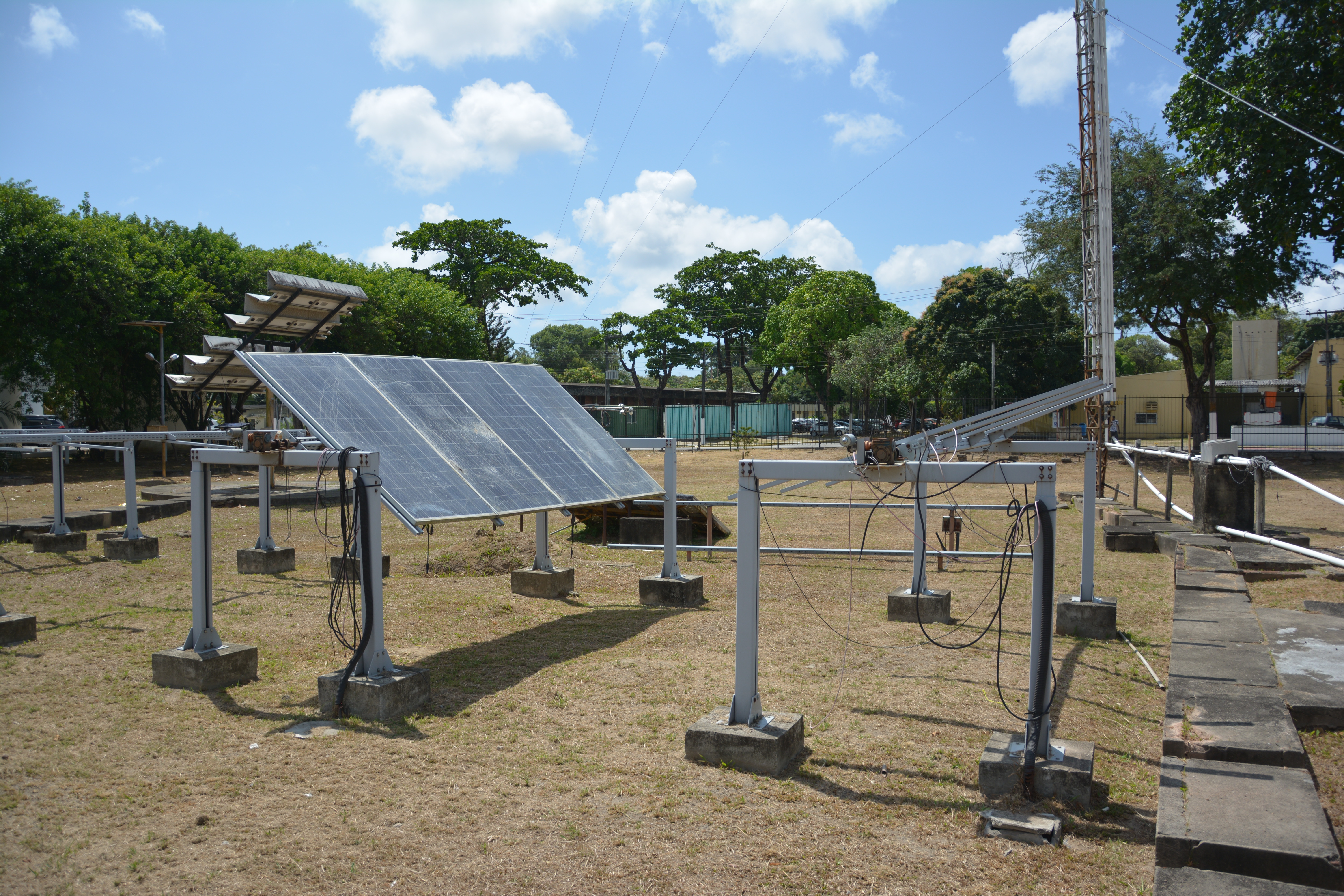
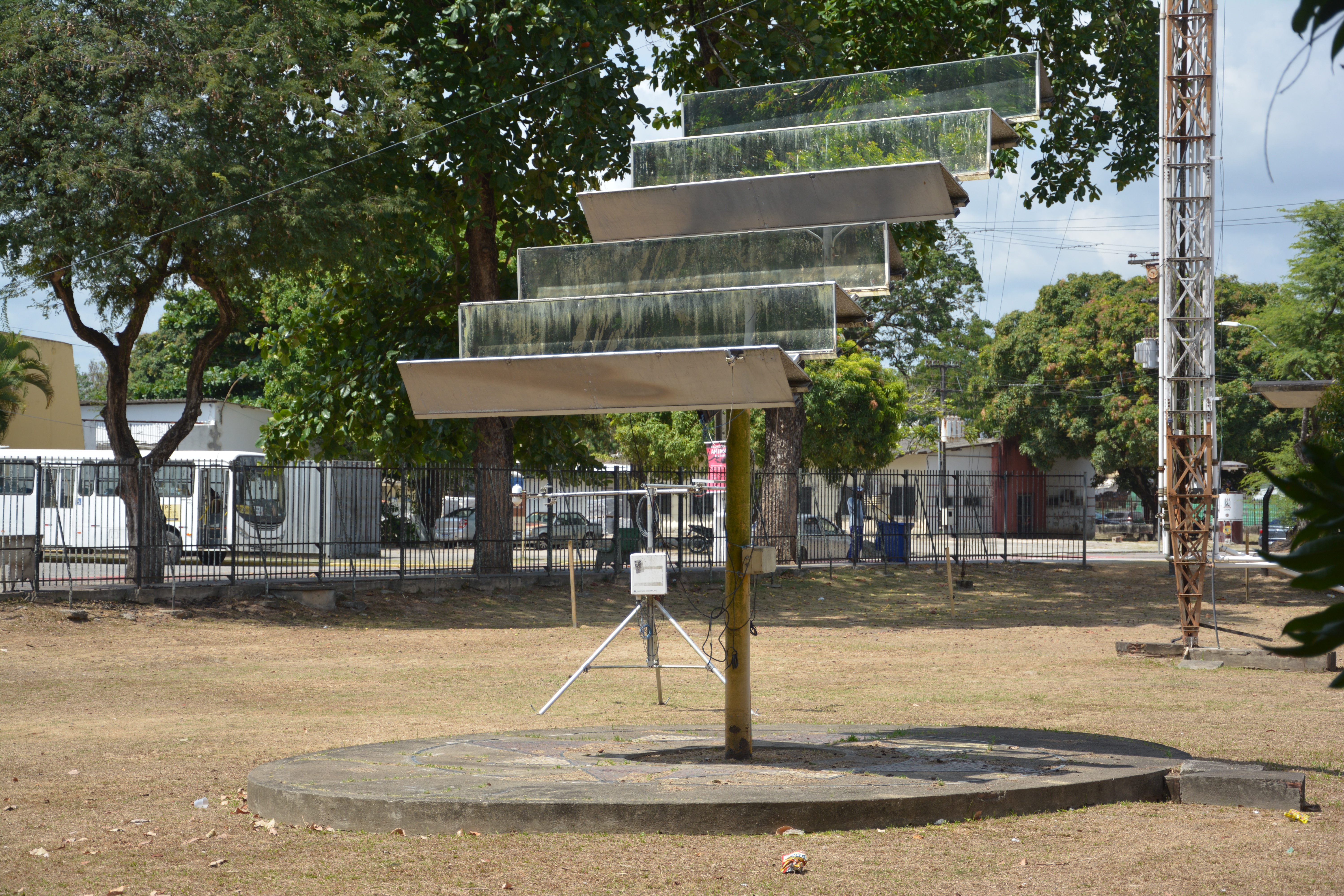
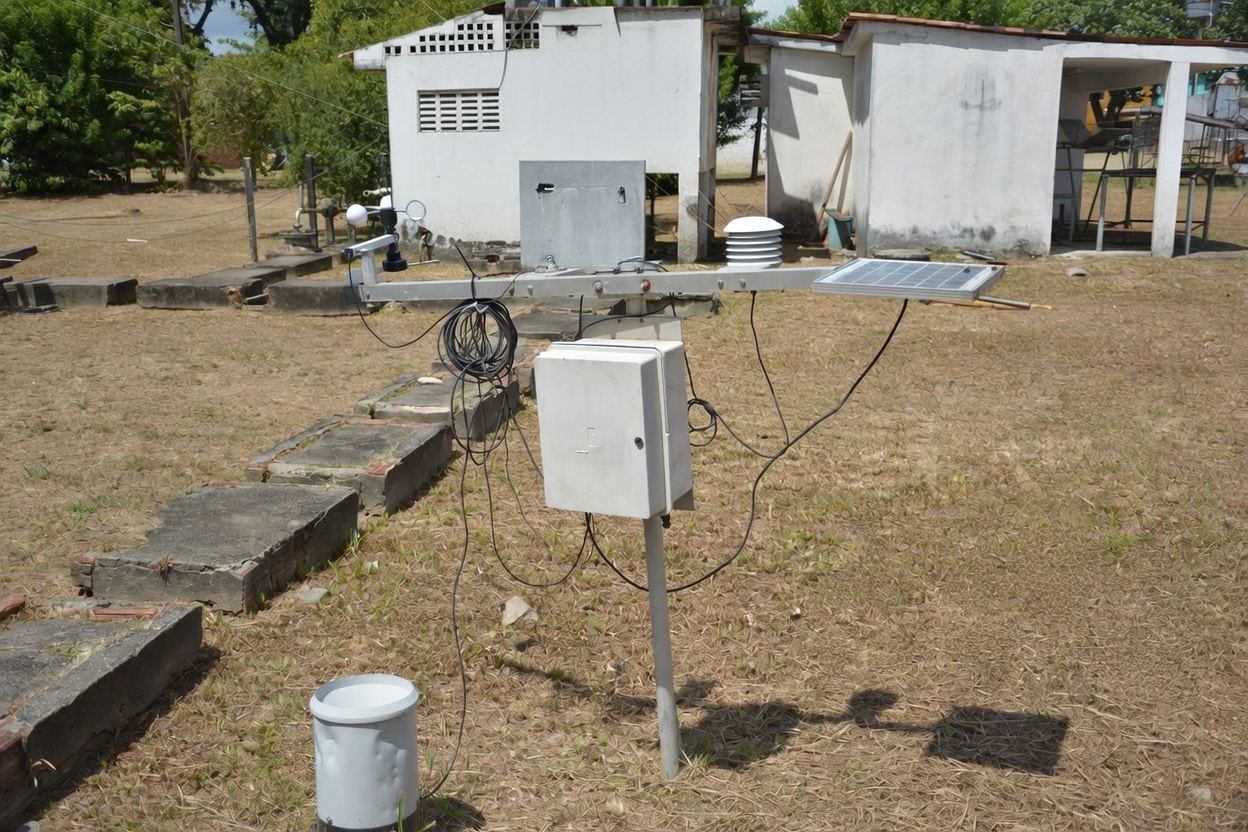
Regarding solar concentration, the Test Site features both low-concentration systems, such as V-trough, and high-concentration systems, such as heliostats. CER-UFPE has a 10 kWp high-concentration system connected to the grid.
Indoor PV labs
Head of the Laboratory: Emerson Torres (emerson.torres@ufpe.br)
A controlled environment for conducting indoor tests. It features a variety of equipment for characterizing photovoltaic modules, including I-V curve tracers, voltage sources, a solar simulator, and an electroluminescence camera. It allows characterization tests (I-V curve) on photovoltaic modules under standard test conditions (STC), flash tests to evaluate module performance at different irradiance levels, obtaining I-V curves in dark conditions, and electroluminescence of photovoltaic modules for fault identification.
| Equipment | Qty | Brand | Specifications | Brief description |
|---|---|---|---|---|
| Thermal pyranometers | 16 | Kipp & Zonen e Eppley | 1 CMP21, 1 CMP6, 4 CHP-1, 2 SMP6-V, 2 CVF-4, 2 CHP1, 1 8-48, 1 PSP e 2 NIP | Pyranometers measure of global horizontal irradiance, global tilted irradiance, diffuse horizontal irradiance, and soil albedo. These measurements can be applied in sensor calibration, solar resource analysis, solar energy modeling, and performence assessment of PV and solar thermal devices. |
| Solar Simulator | 1 | Argus | SMTL-V21.3A+ with flash lamps replicating ASTM G173-03 spectrum | The solar simulator is used to characterize PV modules under Standard Test Condition (STC), with flash lamps that replicate the ASTM G173-03 Reference Solar Spectrum along with an integrated I-V curve tracer. It also allows the measurement of I-V curves at different irradiance levels. |
| Electroluminescence testing system | 1 | Nikon | Nikon D5600 camera with silicon-based CMOS sensor | Electroluminescence imaging to identify defects in PV cells or module by analyzing, such microcracks. This method captures the light emitted by solar cells when electrical current is injected in forward bias. The intensity of light observed in EL images correlates with cell performance. |
| Source Measure Unit (SMU) | 1 | Keithley | 2600A for high-precision I-V characterization | High-precision I-V characterization for semiconductor devices, applied to obtain the I-V curve of PV cells or modules under dark conditions with picoampere current resolution. This allows the extraction of physical parameters of PV cells, such as dark saturation current, with high accuracy. |
| Photovoltaic pyranometers | 11 | 6 LI-COR e 5 Apogee | Li-200R e CMP21 | Pyranometers measure of global horizontal irradiance, global tilted irradiance, diffuse horizontal irradiance, and soil albedo. The PV pyranometers have the same response of silicon solar cells. |
| Data acquisition systems (dataloggers) | 23 | Campbell | 4 CR10X, 1 CR10X-2M, 1 CR310, 1 CR800, 8 CR1000, 2 CR1000X, 6 CR3000 | Dataloggers collect and convert electrical signals from the sensors into digital data for storage and analysis. They are essential for monitoring measurements from solarimetric and meteorological stations, as well as the performance of photovoltaic systems. |
| IV Curve Tracer | 3 | Solmetric , pve e Seaward | 1 PVA-1000S, 1 PVPM 1500 X e 1 PV200 | Outdoor electrical characterization of PV modules to evaluate their performance in real operational conditions. |
| Infrared thermography camera | 2 | Fluke e Flir | Fluke Ti105 e Flir One Pro | Thermography provides a detailed temperature profile of PV modules, revealing anomalies such as hot spots that may indicate defects or performance losses. As a non-invasive technique, it can be performed while the system is operating. |
| Drone | 1 | Parrot | Bebop-pro | It allows visual inspection and thermographic testing of a large number of modules simultaneously, as it covers an extensive area. It is applied in fault detection and operation and mantainance activies in PV systems. |
| Test benches for PV systems | 2 | - | - | Test benches for outdoor evaluation of PV modules and systems under different configurations, offering adjustable azimuth and inclination settings, as well as solar tracking systems. |
High Performance Computing Lab
Head of the Laboratory: Janis Galdino (janis.joplim@ufpe.br)
The High Performance Computing (HPC) infrastructure of our Center enables solutions to high computational cost scientific problems concerning renewable energy (Solar and Wind Energy), being mainly used for studies involving advanced statistical modeling, Computational Fluid Dynamics (CFD), mesoscale atmospheric modeling with WRF (Weather Forecast Research), modeling of solar radiation behavior with satellite and skycam images, advanced Artificial Intelligence techniques, and ocean-atmosphere interaction.
The CER-UFPE HPC infrastructure is composed of 4 clusters (Papa-léguas, Coiote, Patolino and Ligeirinho), and 1 backup system (Pernalonga), with 1.168 CPU cores, 21.504 GPU CUDA cores, 1.632 TB of RAM, 514 TB of Storage, as per specifications in Table below.
| NAME | TYPE | SPECIFICATIONS |
|---|---|---|
| Papa-léguas | Cluster Bare Metal | 8 Compute Nodes, 768 Cores AMD Epyc, 6 Nvidia A30, 21.504 CUDA Cores, 1152 GB RAM ECC, 240 TB storage |
| Coiote | Cluster Proxmox | 5 Compute Nodes, 160 Cores AMD Opteron, 192 GB RAM ECC, 55 TB storage |
| Patolino | Cluster Kubernets | 4 Compute Nodes, 128 Cores AMD Opteron, 128 GB RAM ECC, 44 TB storage |
| Ligeirinho | Cluster Beowulf | 5 Compute Nodes, 80 Cores Intel Xeon E, 128 GB RAM ECC, 15 TB storage |
| Pernalonga | Backup Storage | 32 Cores AMD Opteron, 32 GB RAM ECC, 160 TB de storage |
Storage and Mobility Laboratory
Head of the Laboratory: Douglas Contente Barbosa (douglas.pbarbosa@ufpe.br)
The Storage and Mobility Laboratory (LAM) comprises three main infrastructures for testing battery energy storage systems, smart microgrids, and mobility approaches. The first concerns high-power generation, storage, and a simulation subsystem; the second focuses on automation, control, and an instrumentation subsystem; the third is a smart charging station for electric vehicles.
A. Generation, Power Conversion, and Simulation Subsystem
| NAME | TYPE | SPECIFICATIONS |
|---|---|---|
| Victron Quattro | Inverter/Charger (3x) | 10 kVA each; bidirectional; interconnects UFPE grid (AC IN 1) and generator (AC IN 2) to loads |
| Hybrid PV Array | Solar System | 12 solar modules (5.4 kWp total); 1x PHB 6kW Hybrid Inverter |
| DC PV Array | Solar System | 12 solar modules (5.4 kWp); 1x Victron Charge Controller (MPPT) on DC bus |
| Combustion GenSet | Diesel Generator | 11 kVA continuous power; integrated to secondary input of inverter bank |
| IT6012C-800-50 | Bidirectional DC Supply | Emulation and testing of DC power injection/absorption |
| IT6018C-300-225 | Bidirectional DC Supply | High current demand; simulation of energy storage system responses |
| IT7915P-350-90 | Grid Simulator | Regenerative; grid disturbance emulation and compliance testing (Grid-tie) |
| Typhoon HIL404 | HIL Platform | Academic Package; Real-Time Simulation (RTS) of power systems and converters |
| Signal Gen Interface | DSP uGRID Board | Integrated into HIL; orchestrates up to 3 DSPs for microgrid control logic |
B. Automation, Control, and Instrumentation Subsystem
| NAME | TYPE | SPECIFICATIONS |
|---|---|---|
| Victron Ekrano GX | HMI (Interface) | 7" Touchscreen; local data visualization and microgrid interaction |
| Siemens S7-1500 | PLC (Controller) | Plant master; supports Ladder (LD) and Structured Text (SCL) |
| SEL-3530 / SEL-3505 | RTAC (Automation) | Data gateways and secure logic processors for substation integration |
| GNSS/GPS Clock | Time Sync System | Satellite synchronized; precise network Time-Stamp and oscillography |
| Managed Switch | Network | 24-Port Ethernet; industrial communication backbone (LAN) |
| Dell Alienware R15 | Workstation (2x) | Core i9-13900K, 32GB RAM, RTX 4070Ti, 1TB SSD; HIL and SCADA focus |
| SCADA Environment | Supervision | Dynamic visual interface, alarm management, and Historian logging |
| Fluke 435 / Dranetz | Analyzers | Mobile diagnostics, harmonic studies, and grid certification (Class A) |
| Camille Bauer / PMS | Instrumentation | Models 112136B/112130, PMS330/340; distributed electrical acquisition |
| Thermal Camera | Inspection Tool | Compact unit for predictive maintenance and safety |
| FCS3000 / BSS2000M | Software Licenses | Fuel cell simulation and BESS behavior/cycling emulation |
| Smart Load Mgmt | EV Control | Control and balancing for up to 5 electric vehicle charging stations |
C. Electric Mobility Infrastructure (e-Lounge Smart Charging Hub)
| NAME | TYPE | SPECIFICATIONS |
|---|---|---|
| 20-foot Container | Modular Structure | Climate-controlled; technical room and user lounge area |
| Victron Cerbo GX | EMS (Energy Mgmt) | Peak shaving; VE.CAN, ModBus, Ethernet, Bluetooth, and Wi-Fi |
| WEG WEMOB Station | DC Fast Charger | 30 kW; CCS-2 connector; OCPP 1.6 JSON; 4G/Wi-Fi |
| AC Charging Station | Vehicle Charger | 22 kW; Integrated into the microgrid ecosystem |
| Carport Structure | Infrastructure | 6 operational parking spaces; structural support for PV modules |
| Victron MultiPlus-II | Inverter/Charger | 48/10000/140-100; power supply and dynamic control of the Lounge |
| SmartSolar MPPT | Charge Controllers | Models 250/100 and 150/70; dedicated to E-Lounge PV array |
| Victron Ekrano GX | HMI (Interface) | 7" Touchscreen; local data visualization for E-Lounge |
| Intelbras Security | Monitoring | iMHDX 3008 DVR, CCTV cameras, Fire Panel, and smoke detectors |
| Smart Charging App | Software & App | Access control, availability, reservations, and tariff management |